 THE HISTORY OF THE GRAND PRIX OF MONACO BY ROY HULSBERGEN THE HISTORY OF THE GRAND PRIX OF MONACO BY ROY HULSBERGEN |
|||||||||||||||||||||||||||||||||||||||||||||||||||||
|
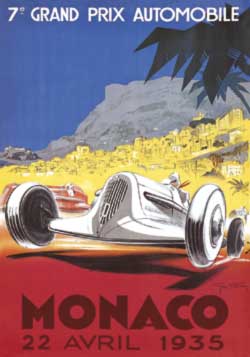
7th GrandPrix - 1935 |
April 22nd - 100 laps of 3.180 km - 318 km |
|||||||||||||||||||||||||||||||||||||||||||||||||||
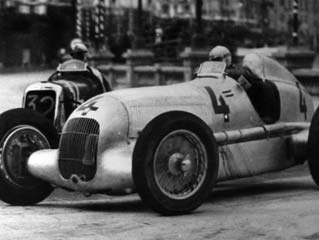
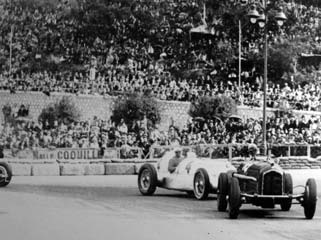
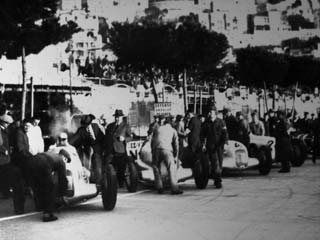
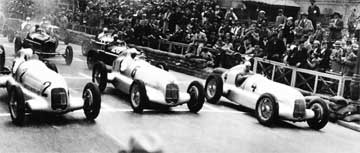
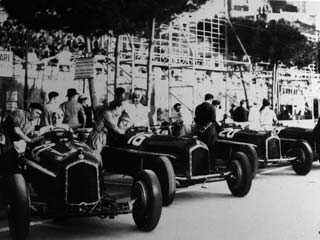
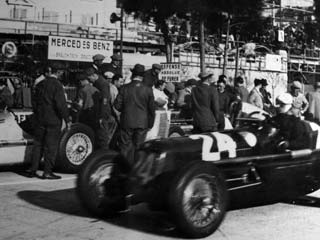
Without any paint they looked strange next to the other colourful cars. The mechanics looked more like laboratory assistants, the engine oil needed to be pre-heated to become fluid, mechanical parts were covered in electrical heated blankets and the fuel was the same as used in the V1 rockets. The public looked at this in awe. With the introduction of time keeping to the nearest tenth of a second, Caracciola shatters the lap record with 1'56"6. The power of the Mercedes was awesome, up hill Beau Rivage, the other cars were just left behind. The Scuderia Ferrari, Alfa Romeo P3's, occupy the second and third rows, Nuvolari, the fastest P3 driver, qualifying with a time of 1'59.4". Again an affluence of 100.000 spectators, literally inundating Monaco.
|
|||||||||||||||||||||||||||||||||||||||||||||||||||||
|
|
Starting Grid
|
||||||||||||||||||||||||||||||||||||||||||||||||||||
Race Result
Fastest lap: Luigi Fagioli, Mercedes W25, 1’58.4”, 96.689 km/h Retired:
|
Race
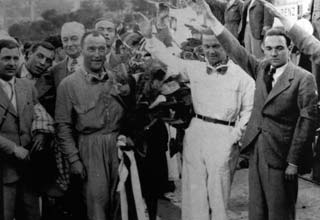
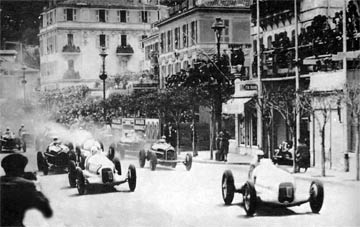
Caracciola re-takes his position but not for long, his engine gives up. Fagioli having refueled in 35 seconds still leads with Dreyfus as the sole menace. The public acclaims Dreyfus the sole contender left to spar with the brute Mercedes. But all he can do is keep the difference within 40 seconds. The Mercedes gains every time on the straights.
|
||||||||||||||||||||||||||||||||||||||||||||||||||||